 🇪🇸 Spanish for foreign workers · levels A1 and A2
- ✔ Your company chooses the number and pace of the classes
- ✔ All costs can be covered by Spain's employer training credit (FUNDAE)
A sample workshop: 8 modules of real situations · 26 teaching hours
Each module has a video scene, a comprehension exercise with instant feedback, a lab with key phrases, conversations with Natalia and a speaking task corrected by your tutor.
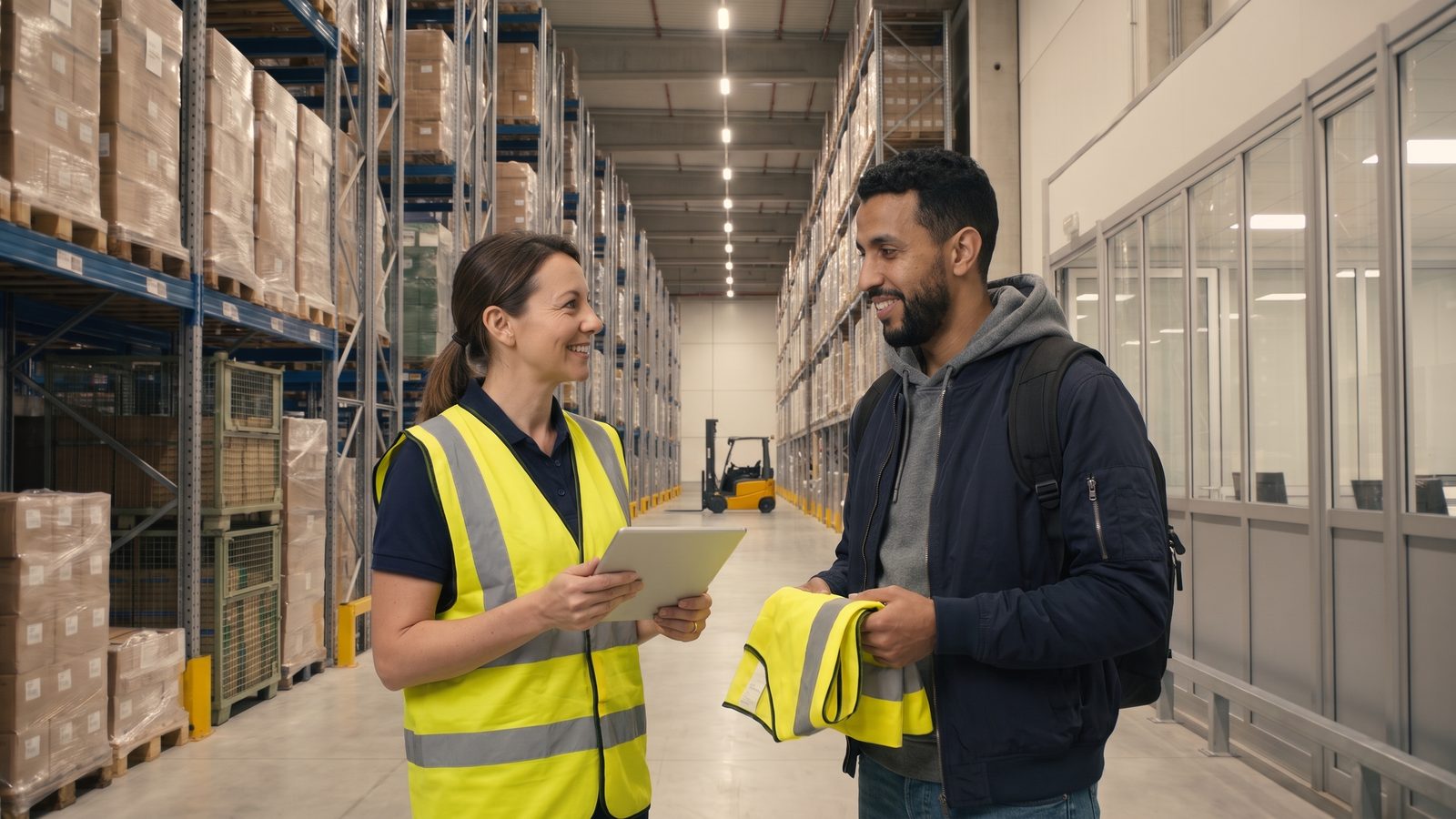
Introduce yourself, understand your timetable and the basic rules of the warehouse.
Protective equipment, signs and how to warn of a danger.
The scanner, locations, quantities and numbers.
Loading docks, delivery notes and checking the goods that arrive and leave.
Understand instructions, ask for help and ask people to repeat.
Change a shift, say when you can't come and understand your payslip.
Explain what happened, warn in time and ask for help.
A full working day with Natalia and a recording corrected by your tutor.
Sample class · Module 1: The first day
Try it now: it is a real class from the workshop, with no sign-up, on your computer or your phone.
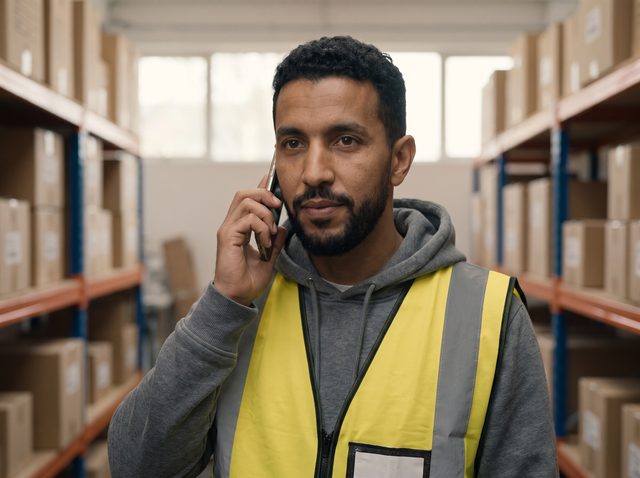
🎬 The scene: First day at the warehouse
📄 Show the transcript (better after answering)
Marta: Hola, buenos días. Tú eres Youssef, ¿verdad?Hello, good morning. You're Youssef, right?
Youssef: Sí, soy yo. Buenos días.Yes, that's me. Good morning.
Marta: Yo soy Marta, la jefa de almacén. Bienvenido a la empresa.I'm Marta, the warehouse manager. Welcome to the company.
Youssef: Gracias. Estoy un poco nervioso.Thank you. I'm a bit nervous.
Marta: Tranquilo, es normal. Primero, ponte el chaleco y las botas de seguridad.Don't worry, that's normal. First, put on the high-visibility vest and the safety boots.
Youssef: Vale. ¿Dónde está el vestuario?OK. Where is the changing room?
Marta: Al fondo, a la derecha. Al lado está la máquina para fichar.At the far end, on the right. Next to it is the clocking-in machine.
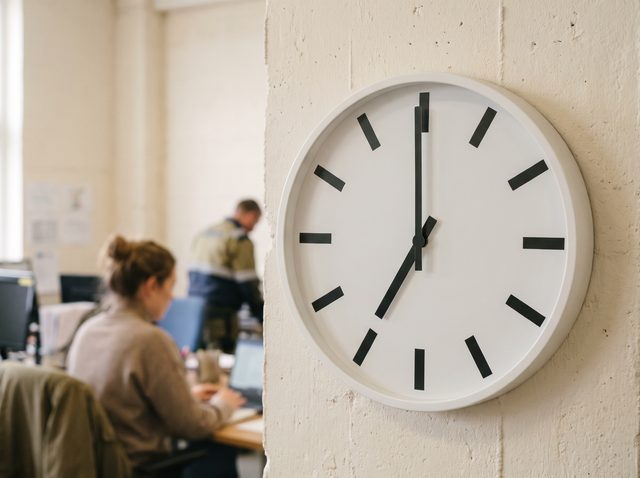
Youssef: ¿A qué hora empieza mi turno?What time does my shift start?
Marta: Tu turno es de siete a tres. Tienes un descanso a las diez.Your shift is from seven to three. You have a break at ten.
Youssef: ¿Y qué hago hoy?And what do I do today?
Marta: Hoy preparas pedidos con Luis. Él te explica cómo funciona el escáner.Today you'll pick orders with Luis. He'll explain how the scanner works.
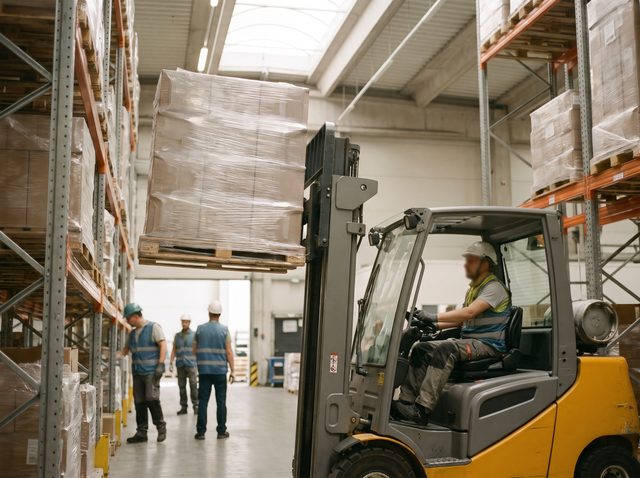
Youssef: ¿Puedo usar la carretilla? En mi país trabajaba con carretillas.Can I use the forklift? In my country I worked with forklifts.
Marta: Aquí todavía no. Primero necesitas el carnet de carretillero.Not here, not yet. First you need a forklift licence.
Marta: Y una cosa muy importante: camina siempre por el pasillo verde.And one very important thing: always walk on the green walkway.
Youssef: Entendido. ¿Y si tengo un problema?Understood. And if I have a problem?
Marta: Me llamas a mí. Y si no entiendes algo, pregunta. Sin miedo.You call me. And if you don't understand something, ask. Don't be afraid.
Youssef: Muchas gracias, Marta.Thank you very much, Marta.
Marta: De nada. ¡Vamos, te presento al equipo!You're welcome. Come on, I'll introduce you to the team!
✅ Comprehension: did you understand? 0 / 5
Watch the scene and answer. You will see at once if your answer is right. The questions are in Spanish; the translation is underneath.

1. ¿Quién es Marta?
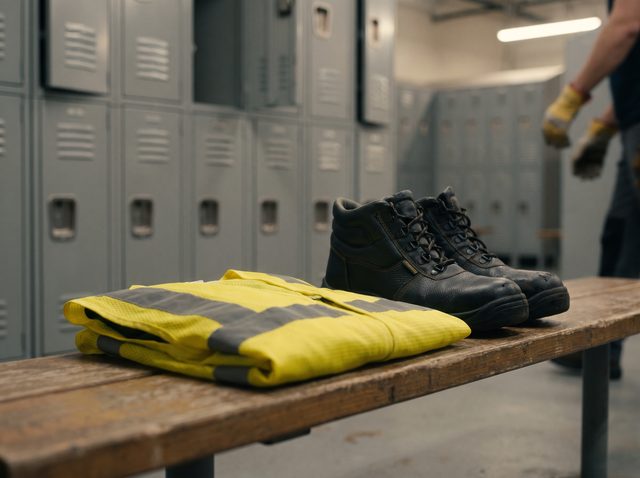
2. ¿Qué tiene que ponerse Youssef primero?
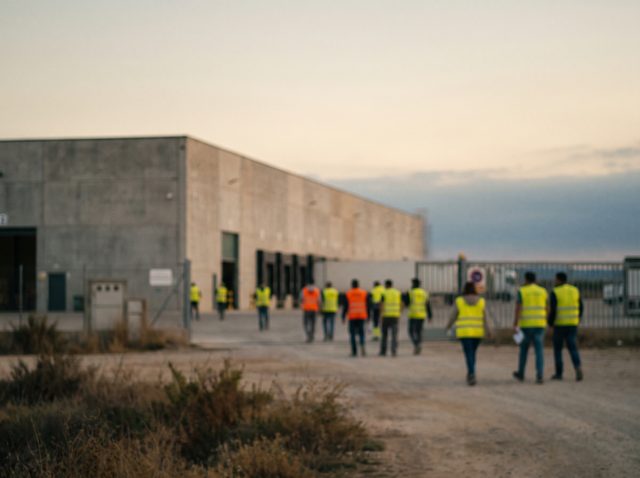
3. ¿Cuál es el horario de Youssef?

4. ¿Verdadero o falso? Hoy Youssef puede usar la carretilla.
5. ¿Qué hace Youssef si tiene un problema?
🗣️ Lab: the key phrases
Listen to Marta, repeat out loud three times and press 🎤 to check that you are understood.



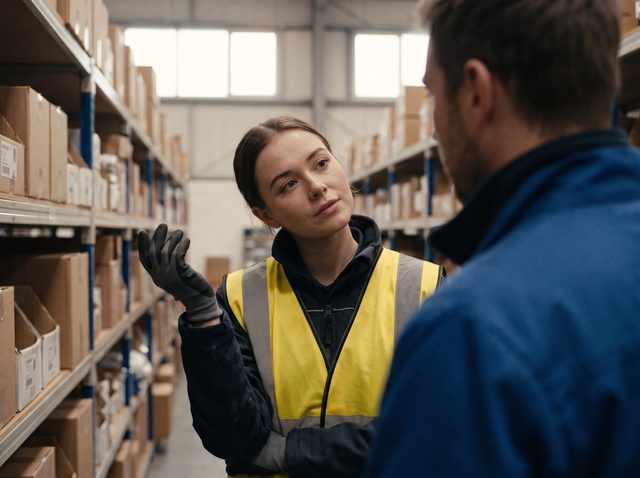

💬 Conversation with Natalia
The workshop's AI assistant · Spanish for foreign workers
✏️ Es mi primero día → Es mi primer día («primero» pierde la -o delante de una palabra masculina).
✏️ yo trabajo dos años → trabajé dos años o he trabajado dos años (es pasado).
Natalia is the workshop's artificial intelligence assistant. She plays your manager, a colleague or a customer so that you can practise the conversations of your job in Spanish whenever you want, at any time, and she corrects you at the end.
How you practise- You copy a conversation task from the module and send it to Natalia.
- Natalia starts by playing her role.
- You answer her in Spanish, typing or dictating with your voice.
- When you want to finish, you type STOP and Natalia corrects your mistakes.
🎙️ Speaking: your turn
A Spanish workshop tailored to your company
This is a sample. We prepare the workshop for companies with workers from other countries, with the situations of their warehouse, their safety rules and their vocabulary, at the real level of each group: video scenes from your sector, a pronunciation lab, role-plays with Natalia and a tutor who corrects. If you want to apply for Spanish nationality, we also prepare the DELE A2 and the CCSE test of the Instituto Cervantes. Companies in Spain can usually fund it through FUNDAE, at no cost to the worker. Tell your company about it, or write to us.
Ask for a tailored workshopWrite on WhatsAppSpanish courses in our catalogue
The workshop can be booked together with these courses (pages in Spanish), which companies can fund through FUNDAE. Ask us and we will prepare it for your team.